Published on 01/12/2025
Tucked away in Armenia’s southern highlands, the Yeghegis River Valley is one of the Caucasus region’s most remarkable—and fragile—landscapes. Shaped by water, mountains, and centuries of coexistence between people and nature, the valley harbours an exceptional concentration of biodiversity.
Today, it is also emerging as one of Armenia’s most compelling restoration success stories.
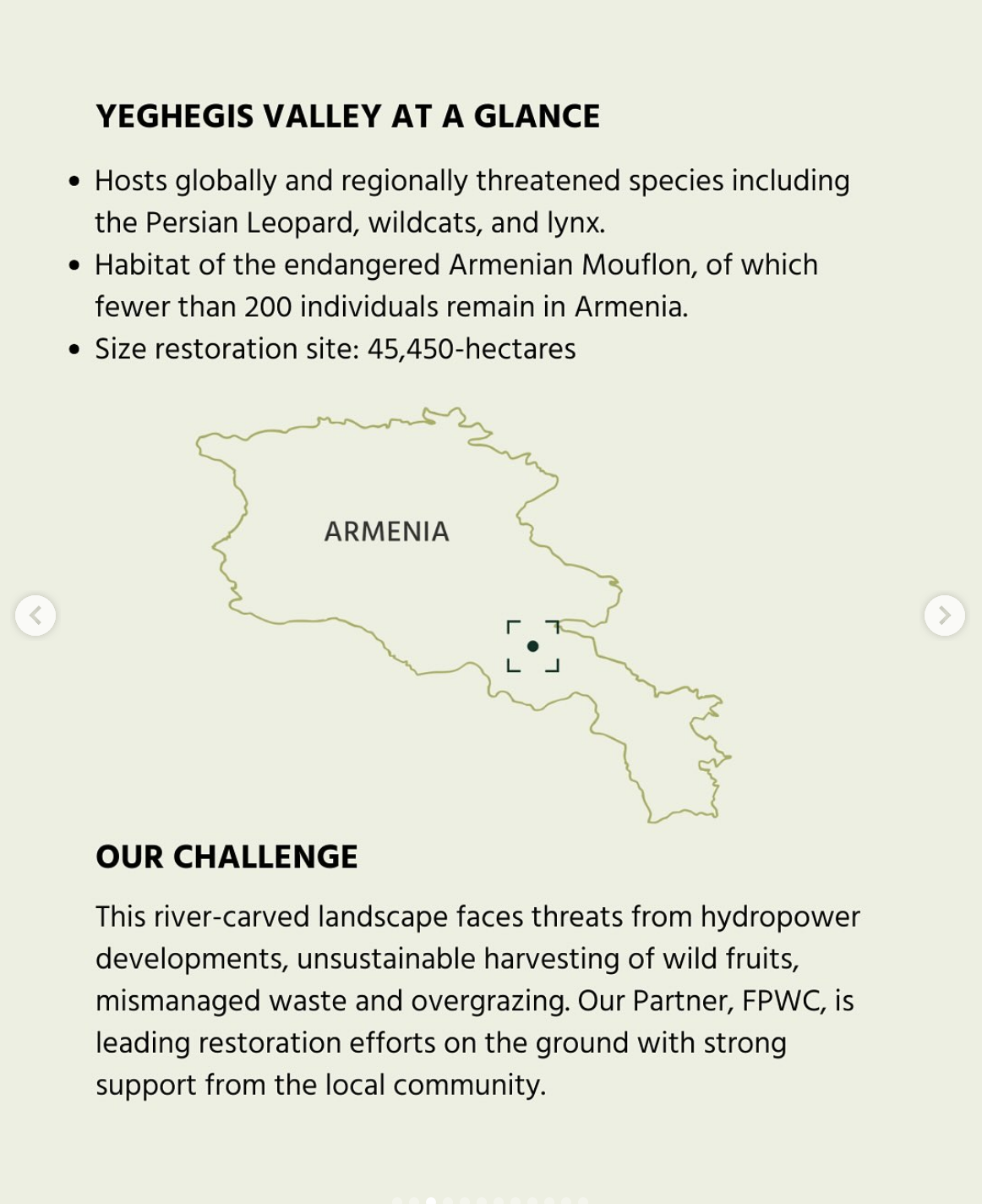
The Yeghegis Valley spans 45,450 hectares of forests, grasslands, and river systems that support globally and regionally threatened species. Among them are elusive predators such as the Persian leopard, Eurasian lynx, and wildcat, alongside one of Armenia’s most endangered mammals—the Armenian mouflon, with fewer than 200 individuals remaining nationwide.
This mosaic landscape functions as a vital ecological corridor within the Caucasus, connecting mountain ranges and sustaining biodiversity well beyond its boundaries. Its importance has been recognized by international conservation actors, including BirdLife Europe, which has highlighted Yeghegis as a priority landscape for long-term restoration.
Like many river valleys in the region, Yeghegis faced escalating pressure in recent decades. Hydropower development fragmented river flows, while unsustainable harvesting of wild fruits, mismanaged waste, and overgrazing placed growing strain on ecosystems and livelihoods alike.
Rather than allowing gradual degradation to continue, a different path was chosen.
The Foundation for the Preservation of Wildlife and Cultural Assets (FPWC) began leading restoration efforts in the Yeghegis Valley with a clear principle: conservation must work with local communities, not around them.
Through reforestation, habitat restoration, improved land-use practices, and close collaboration with residents, FPWC has helped reverse damaging trends while strengthening local stewardship. This approach—rooted in trust, science, and long-term commitment—has transformed Yeghegis into a flagship example of community-led, landscape-scale conservation in Armenia.
FPWC’s work in the valley is carried out in partnership with international supporters, including the Endangered Landscapes Programme, with backing from the Sigrid Rausing Trust, reinforcing Yeghegis’ role as a model restoration landscape of regional importance.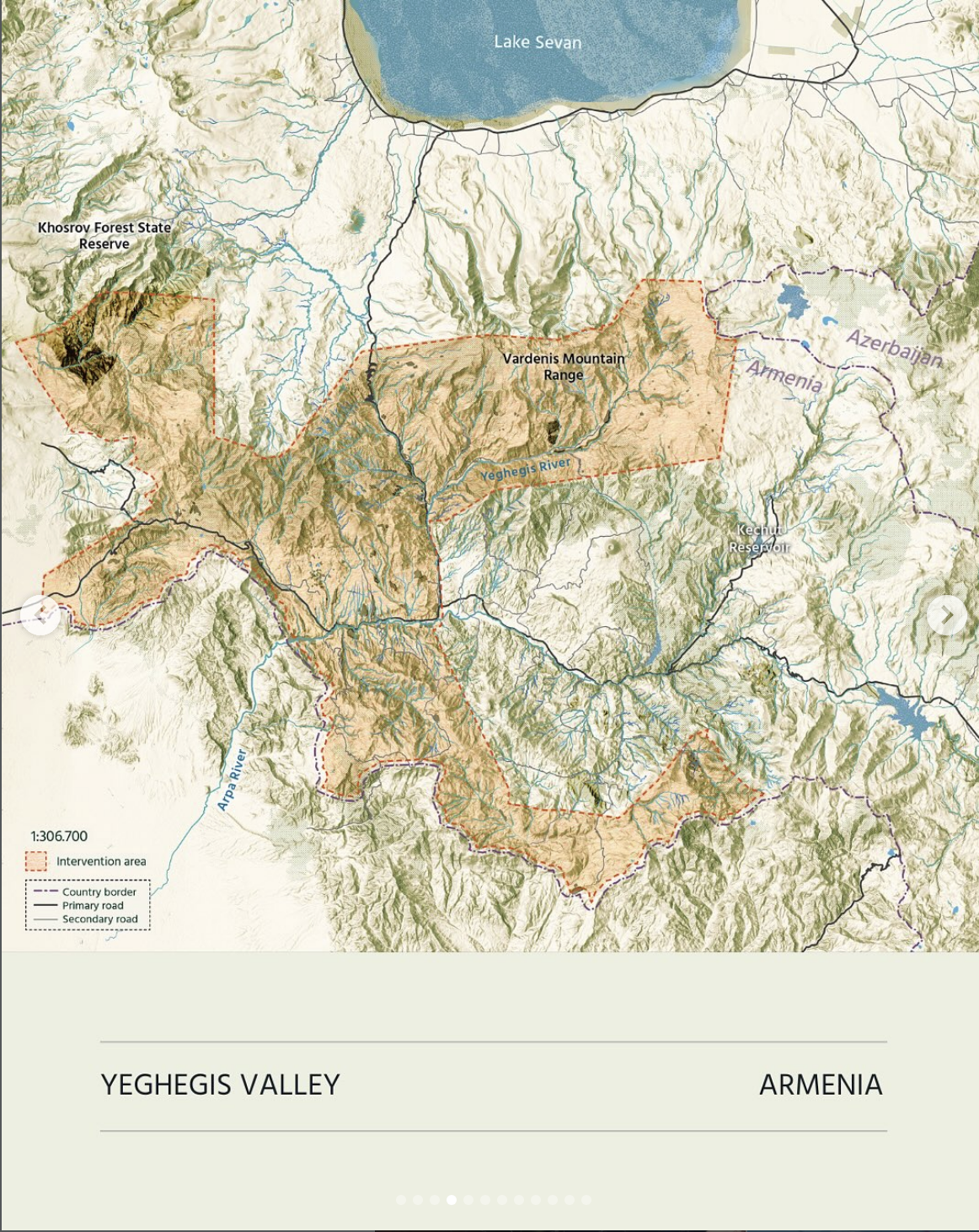
What sets Yeghegis apart is not only ecological recovery, but social resilience. Communities are actively engaged in protecting the valley’s future—benefiting from more sustainable grazing and agriculture, healthier ecosystems, and renewed natural capital.
This integrated model addresses the root causes of environmental degradation while ensuring that conservation brings tangible, long-term benefits to those who live on the land.
For Ruben Khachatryan, Founder and Director of FPWC and IUCN Regional Councillor for Eastern Europe, North & Central Asia, Yeghegis represents the convergence of local action and global conservation principles.
“Yeghegis shows what is possible when conservation is built from the ground up,” says Khachatryan.
“When local communities are trusted as partners and nature is treated as a shared responsibility, restoration becomes real.”
Reflecting on its wider relevance, he adds:
“As an IUCN Regional Councillor, I see Yeghegis as a living example of how landscape-scale restoration can succeed across our region. Protecting biodiversity, restoring rivers, and strengthening communities are not separate goals—they depend on one another.”
The vision for Yeghegis is clear and ambitious.
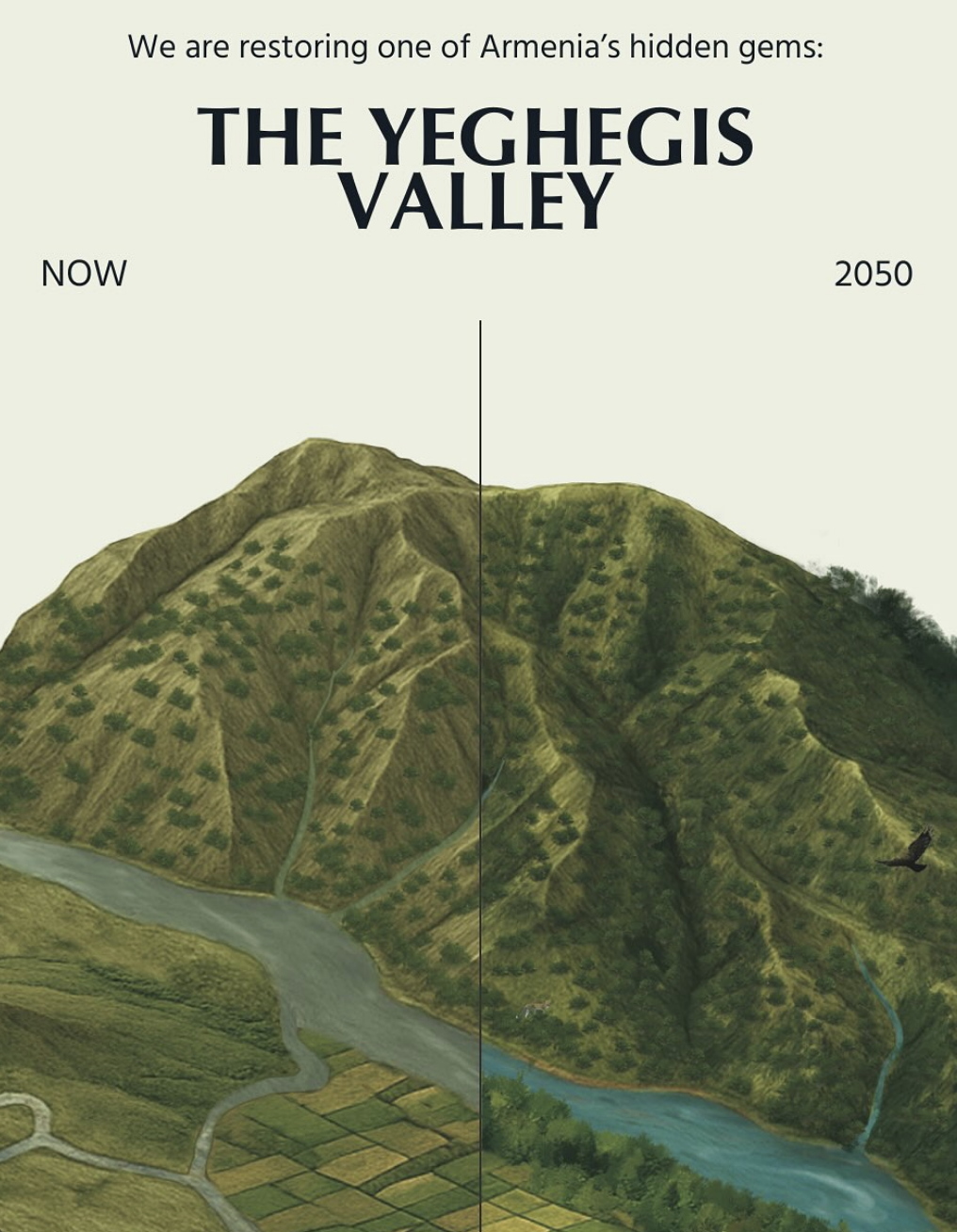
By 2050, forests across the valley are expected to be fully restored. Damaged river systems will be reconnected, with multiple hydropower installations removed or rehabilitated to allow natural water flows to return. Wildlife populations will be more stable and connected, and local communities will prosper through sustainable land use supported by healthy ecosystems.
This long-term perspective—shared by FPWC and its international partners—positions Yeghegis as a demonstration of what restoration can achieve when it is properly resourced and patiently implemented.
Once vulnerable to cumulative pressure, the Yeghegis Valley is now widely recognized as a landscape in recovery. Its transformation shows that conservation is not only about protection, but about restoration, partnership, and vision.
Yeghegis is no longer just a hidden gem of Armenia.
It is a living example of how nature can recover—and how people and ecosystems can thrive together.