Published on 23/06/2026
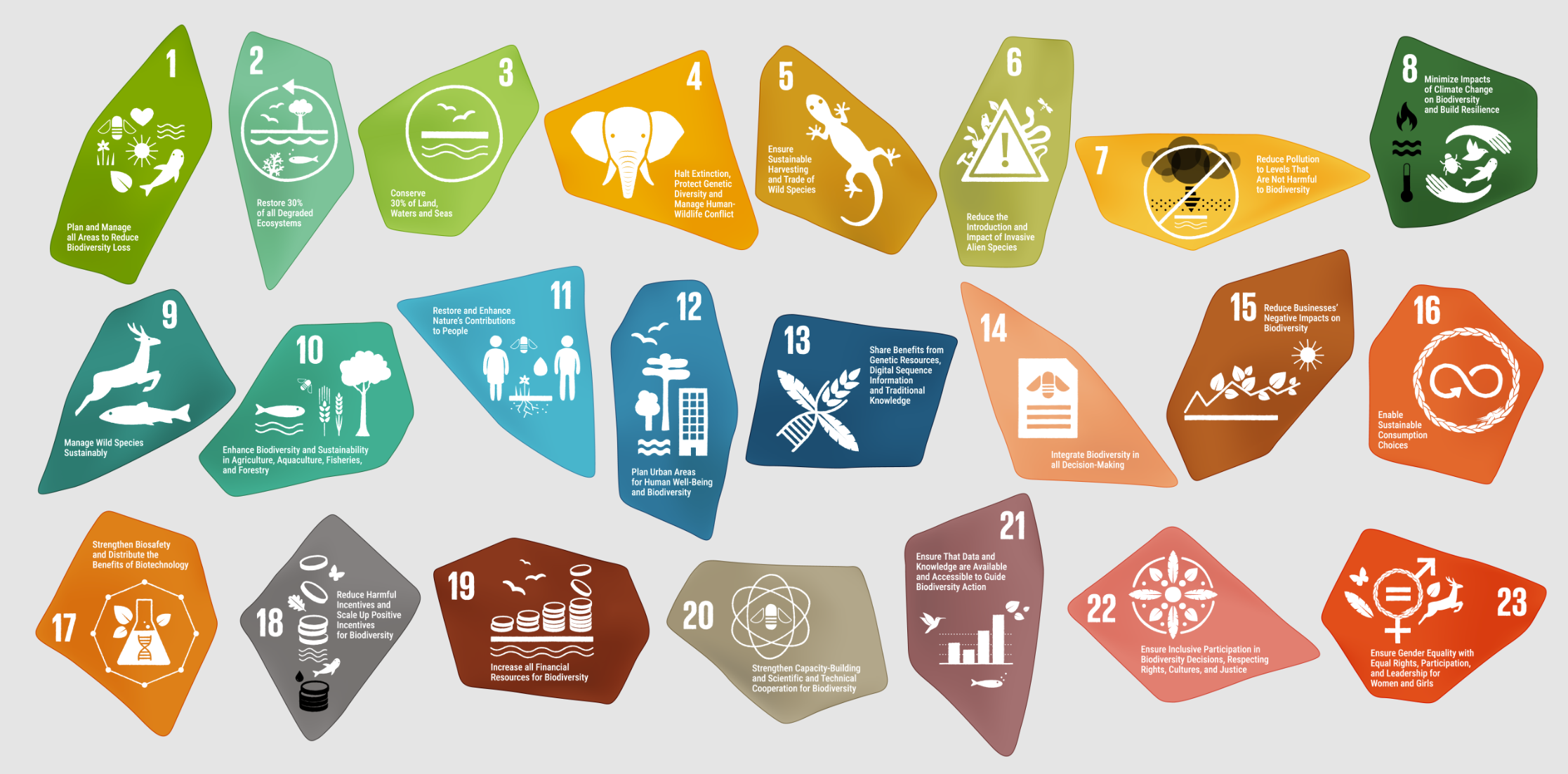
In December 2022, at COP15 in Montreal, 196 countries adopted the Kunming-Montreal Global Biodiversity Framework (GBF) — the agreement that now sets the world's course on nature for this decade. It replaced the Aichi Targets, most of which the world missed, with 23 targets and four longer-term goals running to 2050.
The Framework's headline commitment is the one most people have heard of: at least 30% of terrestrial, inland water, and coastal and marine areas effectively conserved and managed by 2030. That's Target 3, and it is arguably the single target most directly relevant to a Symposium about protected areas and conservation governance.
— Target 3, Kunming-Montreal Global Biodiversity Framework
Globally, roughly 17% of land and 8% of ocean currently carry some form of protected status. Closing that gap in under four years means governments, indigenous peoples, local communities, and conservation organisations all moving at once — and it means resolving questions the Aichi era never settled.
Three of those questions sit directly inside this Symposium's Working Group streams:
What counts as an OECM, and who decides?
How is "30%" measured — by area declared, or by area effectively managed?
How does expansion respect the rights of indigenous peoples and local communities (Target 22)?
CBD COP17 in Yerevan this October is the first COP since the Framework's adoption where countries report formally on progress toward Target 3 and the other 2030 targets. This Symposium, convening immediately before COP17 opens, is where non-state conservation actors — NGOs, scientists, protected area managers — shape the recommendations that reach the negotiating table.
That is also why Working Group A: Legal & institutional frameworks opens with exactly this question: what institutional home should non-state conservation governance have within government, as the 30×30 target moves from commitment to implementation?